Thermal biology of insects and other organisms: Animals exposed to sunlight absorb heat in the near-infrared wavelengths. Some animals are far more effective at reflecting away this hear. The McGlynn Lab investigates the spatial, temporal, and phylogenetic distribution of near-infrared reflectivity to understand the role of this trait in thermal ecology and the evolution of thermal traits in the context of climate change. Most of this work is conducted in collaboration with Dr. Allison Shultz, Associate Curator of Ornithology at the Natural History Museum of Los Angeles County. Other collaborators include Devi-Stuart Fox of the University of Melbourne and the Laurent Pilon lab at UCLA.
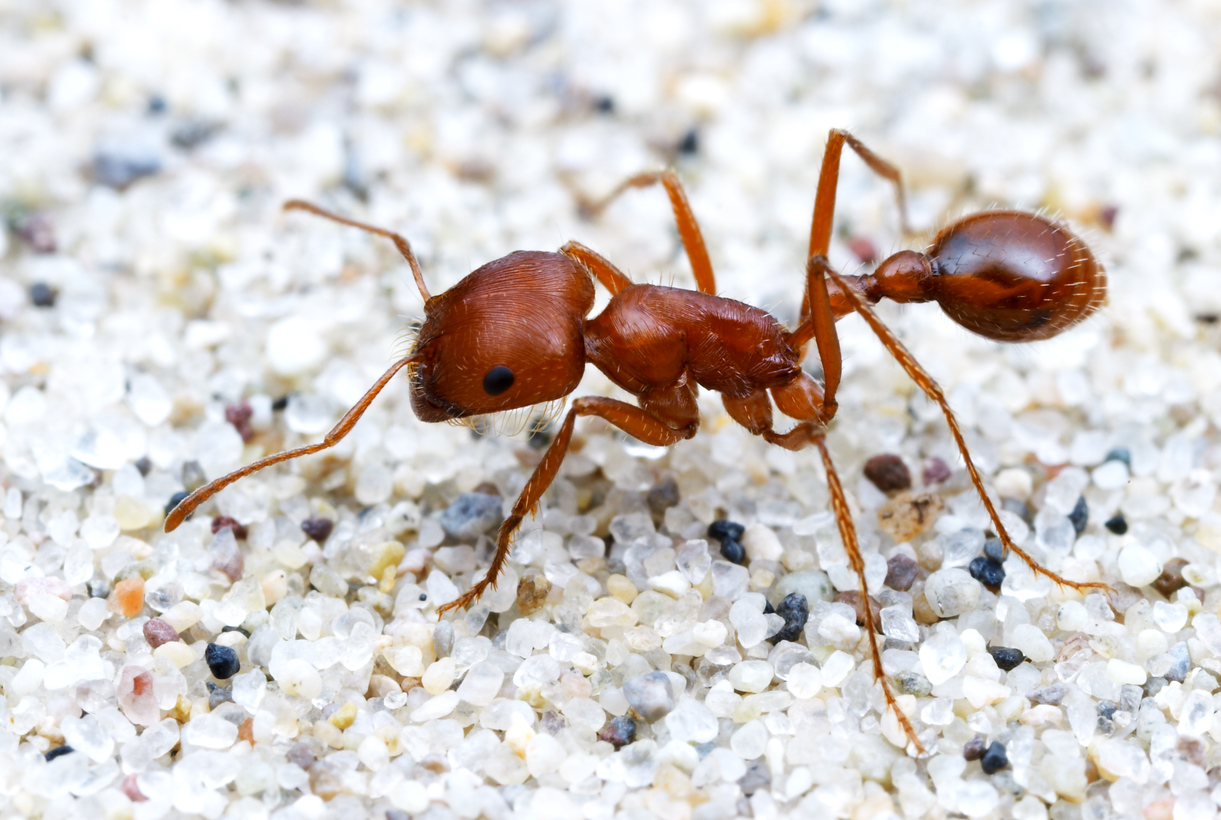
Urban insect biodiversity: Cities are filled with biodiversity and we have much to learn about how and why species are able to persist in highly urbanized in environments. Our lab initiated the Harvester Hunt project to understand how cities support the persistence of native harvester ants (Pogonomyrmex spp.) in the Los Angeles metropolitan area. This is a community science project builds on participation of everybody in the city who loves nature and shares their observations on iNaturalist. This project is being conducted in collaboration with Dr. Megan Barkdull, Assistant Curator of Entomology at the Natural History Museum of Los Angeles County, and the team operating the Urban Nature Research Center. We are also working with the museum to study the ecology of urban insects as community science BioSCAN collaboration.
Rainforest ant integrative biology: The lab has a long history of conducting research in the ant community at La Selva Biological Station, in northeastern Costa Rica. This community has hundreds of species that coexist with one another, and provide an excellent model for asking perennial and new questions in ecology.
Experimental natural history of ants: How do strobe ants manage to strobe? Why do thieving ants steal from one another? How can bullet ants live on nectar? Why do some ants keep empty nests? How do thieving ants steal? There are so many unanswered questions in nature and sometimes we do research projects to figure them out.